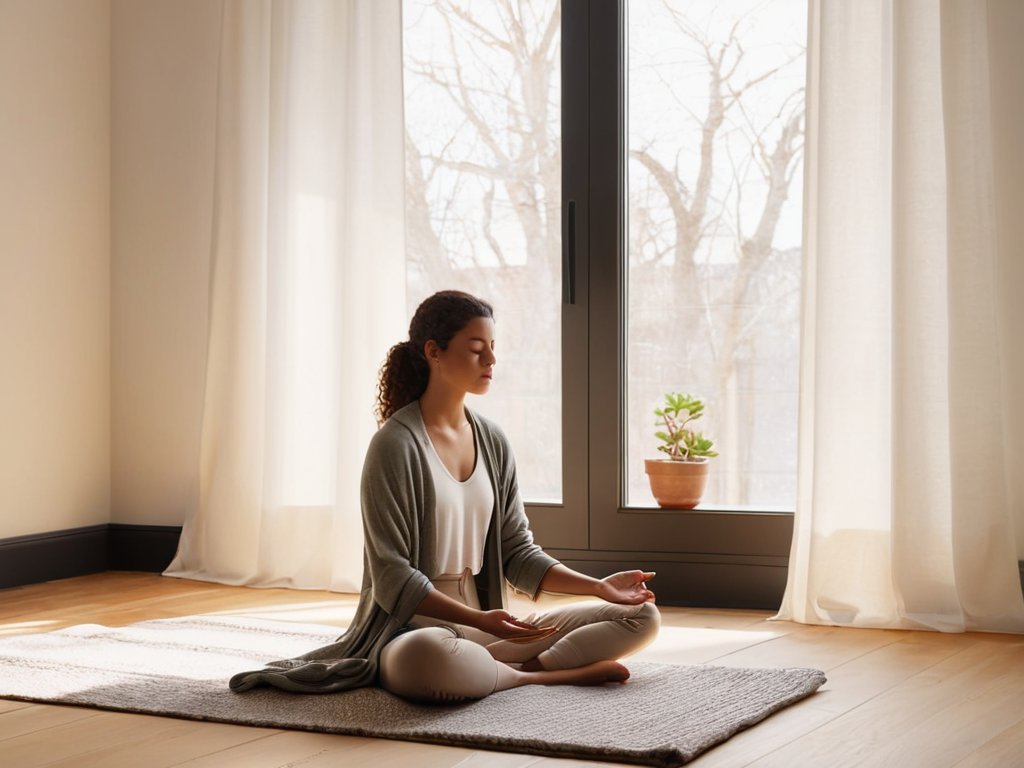
The hum of a Delhi morning market swirled around me—spices, honking rickshaws, clattering tea glasses—when I realized I’d been holding my breath for ten minutes, waiting for the perfect moment to quiet the chaos. That day I learned the daily mindfulness routine isn’t about finding a silent room in a bustling embassy; it’s about anchoring yourself in the middle of the noise.
In the next few minutes I’ll strip away the jargon you’ve heard in wellness blogs and hand you a step‑by‑step guide that fits into any schedule—whether you’re negotiating a treaty at 9 am or catching a night train across the Sahara. You’ll discover three micro‑practices that take less than five minutes each, how to weave breath work into the pauses between emails, and a simple journal prompt that turns fleeting awareness into lasting clarity. By the end, you’ll have a portable toolkit you can pull out in a cramped airport lounge or a quiet corner of your living room, and feel the difference. It’s the kind of practice that feels as natural as checking the time on my vintage globe, yet powerful enough to reshape your day.
Table of Contents
- Project Overview
- Step-by-Step Instructions
- A Global Citizens Daily Mindfulness Routine for Connection
- 5minute Mindfulness Practice Stress Reduction Techniques Simplified
- Morning Meditation Schedule Grounding the Days Journey
- Five Compass Points for a Grounded Day
- Key Takeaways for a Connected Mindfulness Practice
- Mindful Moments, Global Connections
- Wrapping Up: Carrying Mindfulness Across Borders
- Frequently Asked Questions
Project Overview

Total Time: 15-30 minutes per day
Estimated Cost: $0 – $30 (depending on optional accessories)
Difficulty Level: Easy
Tools Required
- Timer or smartphone alarm ((set for 5‑10 minutes))
- Meditation cushion or chair ((optional, for comfort))
- Guided meditation app or audio tracks ((free or subscription-based))
- Journal or notebook ((for reflection))
Supplies & Materials
- Essential oil or incense ((optional, for ambiance))
- Herbal tea or water bottle ((to sip before or after practice))
- Comfortable clothing
Step-by-Step Instructions
- 1. I begin by setting a gentle alarm—not a blaring siren, but a soft chime that feels like a distant prayer call from a remote village. When it sounds, I sit up, place my feet flat on the floor, and let my eyes close as if I’m stepping into a quiet courtyard in Marrakech. I take three slow, deep breaths, feeling the air fill my lungs and then release, reminding myself that each inhale is a bridge between cultures and each exhale is a chance to let tension drift away.
- 2. Next, I turn my attention to the five‑minute body scan. Starting at the crown of my head, I mentally glide down, noting any tightness or tingling without judgment. I whisper a simple affirmation—“I am present, I am connected”—as I move past my shoulders, my chest, my belly, and finally my feet. This practice grounds me, anchoring the abstract ideas of diplomacy and journalism to the very flesh that carries me across continents.
- 3. With my body acknowledged, I shift to mindful listening. I play a short audio clip of a street market from Kolkata or a distant chant from a Sufi gathering. I focus solely on the layers of sound: the clatter of metal, the murmur of voices, the distant call to prayer. By immersing myself in these auditory snapshots, I cultivate empathy for places I may never physically visit, reinforcing the notion that mindfulness is also about hearing the world’s subtle narratives.
- 4. I then write a brief daily intention in my notebook—a small, handwritten note beside a vintage globe I keep on my desk. Today, for example, I might write: “Seek a conversation that challenges my assumptions.” This ritual ties my inner practice to a tangible reminder of the globe’s rotating possibilities, turning abstract goals into concrete action steps.
- 5. After the intention, I engage in a five‑minute gratitude walk around my home or garden, treating each step as a pilgrimage. I consciously notice the texture of the ground, the scent of jasmine, the play of light on the walls. With each stride, I silently thank a specific element—the sunrise for its promise, the cool breeze for its whisper, the old globe for its stories—thereby weaving gratitude into the fabric of my day.
- 6. Finally, before diving into emails or dispatches, I close the routine with a single minute of open‑hearted breathing. I inhale, visualizing the world’s diverse faces gathering in a circle, and exhale, sending a pulse of calm outward. I end with a quiet nod to myself, acknowledging that this brief pause equips me to listen more deeply, write more authentically, and connect more genuinely with the global community.
A Global Citizens Daily Mindfulness Routine for Connection

Each sunrise feels like a diplomatic briefing, so I carve out a 5‑minute mindfulness practice before the inbox floods. Sitting on my balcony, I drift into mindful breathing exercises—inhale for four counts, pause, exhale for six, repeat. That rhythm steadies my nervous system and reminds me that, regardless of timezone, our breath is a shared currency. I then check my handwritten planner, noting the exact slot for a short morning meditation schedule that dovetails with my first cup of chai. By anchoring the day with these quiet moments, I create a mental passport that lets me travel from Delhi’s streets to a quiet Scottish lane without losing my center.
When afternoon meetings start to feel like negotiations, I slip into a mindful walking routine through the nearby park. Each step becomes a moving meditation, a subtle stress reduction technique that grounds me in the present. I carry a pocket notebook for mindfulness journal prompts—questions such as “Which conversation today built a cultural bridge?”—and capture fleeting insights before they fade. Those scribbles turn into a personal archive, echoing the larger narrative of connection I seek to share.
5minute Mindfulness Practice Stress Reduction Techniques Simplified
I set my timer for five minutes the moment I step out of the hostel doorway, jasmine from a nearby market mingling with early traffic. I close my eyes, inhale the city’s rhythm, and count each breath as if I were marking latitude on one of my vintage globes—steady and unhurried. In those seconds I let distant languages dissolve, anchoring myself in the present, a tiny pocket of calm before the day’s negotiations begin.
When the timer chimes, I shift to a quick body‑scan: shoulders drop like temple curtains at dusk, jaw unclenches, and I notice the pulse in my fingertips, a reminder that even a diplomatic impasse is a fleeting vibration. This micro‑pause rewires my stress response, turning cortisol into curiosity about the next culture I’ll encounter. Five minutes, I’ve learned, are enough to reset my mind’s compass.
Morning Meditation Schedule Grounding the Days Journey
I rise before the city hums, let the thin morning light spill across my nightstand where a 1970s globe—still glossy from the last trip to the Altai—waits like a silent witness. I sit on the floor of my modest flat, feet grounded on a woven rug that once belonged to a family in Oaxaca, and set a timer for ten minutes. The first three breaths are a gentle tide, pulling me out of yesterday’s diplomatic briefings and into the present pulse of the world outside my window. I then run a mental passport through three simple stations: gratitude for the sunrise over the Thames, a quiet acknowledgement of the tea ritual I learned in New Delhi, and a brief, compassionate intention to listen more deeply to the voices I’ll meet today. By the time the timer chimes, the world feels a little smaller, and I’m ready to step into the day’s journey with both feet firmly planted and my mind wide‑open.
Five Compass Points for a Grounded Day
- Start with a 3‑minute breath‑anchor as soon as you wake, visualising the sunrise over a familiar horizon
- Create a “mindful pause” before each meal—taste, texture, and gratitude become a bridge to the present
- Set a gentle reminder to stretch and feel your body’s sensations every two hours, turning movement into a meditation
- End the workday with a 2‑minute gratitude scan, noting three small wins that connect you to the wider world
- Close your evening with a 5‑minute “let‑go” visualization, releasing lingering thoughts like clouds drifting over a distant globe
Key Takeaways for a Connected Mindfulness Practice
A brief, consistent morning meditation anchors your intentions and opens you up to the world’s subtle rhythms.
Even five minutes of focused breathing can dissolve stress, making space for empathy and global awareness throughout the day.
Pairing mindfulness with a simple gratitude ritual—like noting one cultural insight you’ve gained—strengthens personal well‑being while deepening cross‑cultural connections.
Mindful Moments, Global Connections
A daily mindfulness routine is the passport that lets our breath travel across borders, reminding us that the same quiet heartbeat beats in every corner of the world.
Alexandra Thompson
Wrapping Up: Carrying Mindfulness Across Borders
Looking back on the steps we’ve mapped out, it’s clear that a daily mindfulness routine doesn’t have to be a sprawling, time‑intensive ritual. By anchoring the morning with a brief grounding meditation—just three to five mindful breaths as the sun rises over the city or the desert—we set a calm baseline for the hours ahead. The 5‑minute practice I outlined later functions as a portable stress‑relief kit, easy to slip into a commute, a coffee break, or a quiet moment between meetings. Together, these habits nurture presence, sharpen focus, and remind us that even in a world of shifting borders, our inner compass can stay steady.
What excites me most is how this modest routine can ripple outward, stitching together the personal and the planetary. Each time I pause to notice the cadence of my breath, I’m reminded of the countless voices I’ve met on distant streets—from the bustling bazaars of Delhi to the quiet fjords of Norway—who, too, seek a moment of stillness amid uncertainty. So I invite you to treat your practice as a daily passport: one breath at a time, you travel inward, then return to the world refreshed, ready to listen, to act, and to bridge divides. Keep the habit alive, and let the quiet become the soundtrack of your global journey.
Frequently Asked Questions
How can I fit a daily mindfulness routine into a hectic schedule?
Whenever my inbox explodes, I steal back three tiny windows—one as I brush my teeth, another while waiting for the subway, and a third before I shut my laptop. In each slot I set a gentle timer, close my eyes, and simply notice the breath or the pulse of the city around me. Those 60‑second pauses stack up, turning chaos into a rhythm that keeps me grounded without demanding a separate hour.
What are some simple mindfulness exercises for beginners that don’t require special equipment?
One of my favorite ways to start the day is a three‑minute breath‑anchor: sit comfortably, close your eyes, and simply count each inhale and exhale up to ten, then begin again. When I’m on a bustling train in Delhi, I practice a “sensory sweep,” noticing three sounds, three textures, and three scents around me. Finally, a gratitude pause—write or whisper three things you appreciate in that moment; no notebook needed, just the intention.
How long should I practice each day to notice real benefits?
From my own rhythm of hopping between London’s misty mornings and Delhi’s sunrise bazaars, I’ve learned that 15‑20 minutes of daily mindfulness is a sweet spot. The first week feels like a gentle pause; by the third, stress eases and focus sharpens. If time is tight, begin with three mindful breaths at sunrise and grow from there—consistency, not marathon sessions, is what truly cultivates calm. Give it at least two weeks and you’ll notice the ripple effect in every interaction.